What is stinger season: A period when marine stingers are most active, driven by warm sea temperatures.
When it occurs: From November to May, peaking between December and March.
Where and what species: Common in coastal shallows, bays, and beaches; includes Irukandji jellyfish, box jellyfish, and bluebottles.
Why it happens: Warm waters and seasonal currents create ideal conditions for jellyfish activity.
Relation to Whitsundays weather:Coincides with summer and early autumn when air and sea temperatures peak and waters are calm and warm.
Essential tips to plan for the Whitsundays weather
Choose the right season: If calm seas are your priority, winter offers the most stable conditions, while spring and autumn provide warmer water for snorkelling and swimming.
Plan around daylight hours: Summer delivers the longest days for full-day adventures, while winter offers cooler mornings and gentle light across every cruise departure.
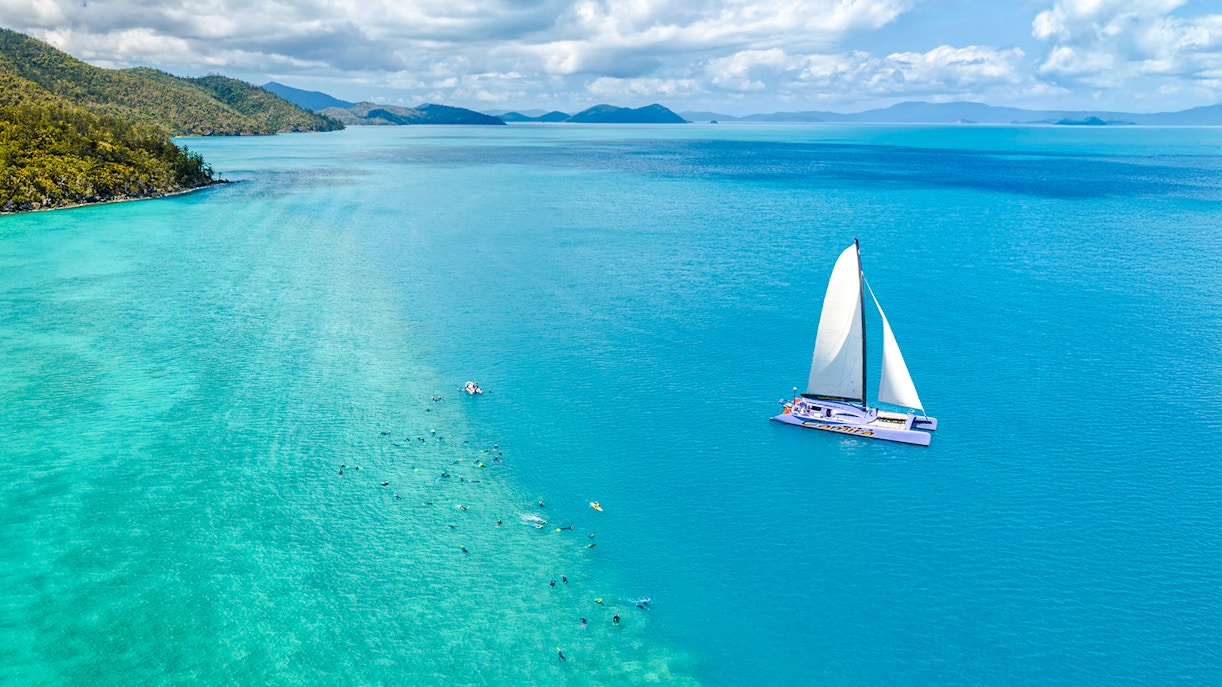
Pick the right vessel type: Guests who prefer the smoothest experience should choose larger vessels during breezier months like September to November.
Match departure time to conditions: All cruises depart in the morning, giving you naturally calmer seas and clearer visibility before afternoon winds develop in summer.
Select snorkel sites by recent weather: Visibility often drops near the shore after heavy rain, so tours that travel to the outer reef offer clearer water during wetter periods.
Prioritise operators that adapt daily: Some tours adjust snorkel and swim stops according to real-time conditions, which often results in better clarity and more wildlife encounters.
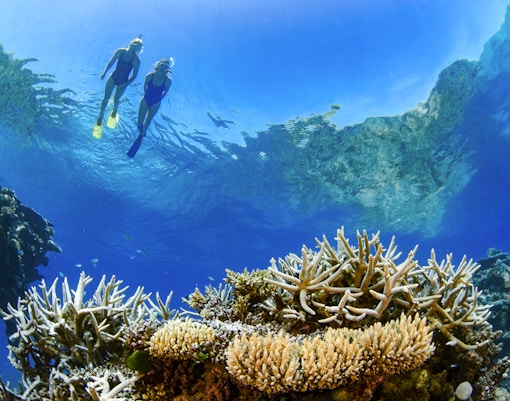
Plan wildlife experiences around the season: Winter is ideal for whale-watching, while spring and autumn provide excellent visibility for coral gardens and turtle sightings.
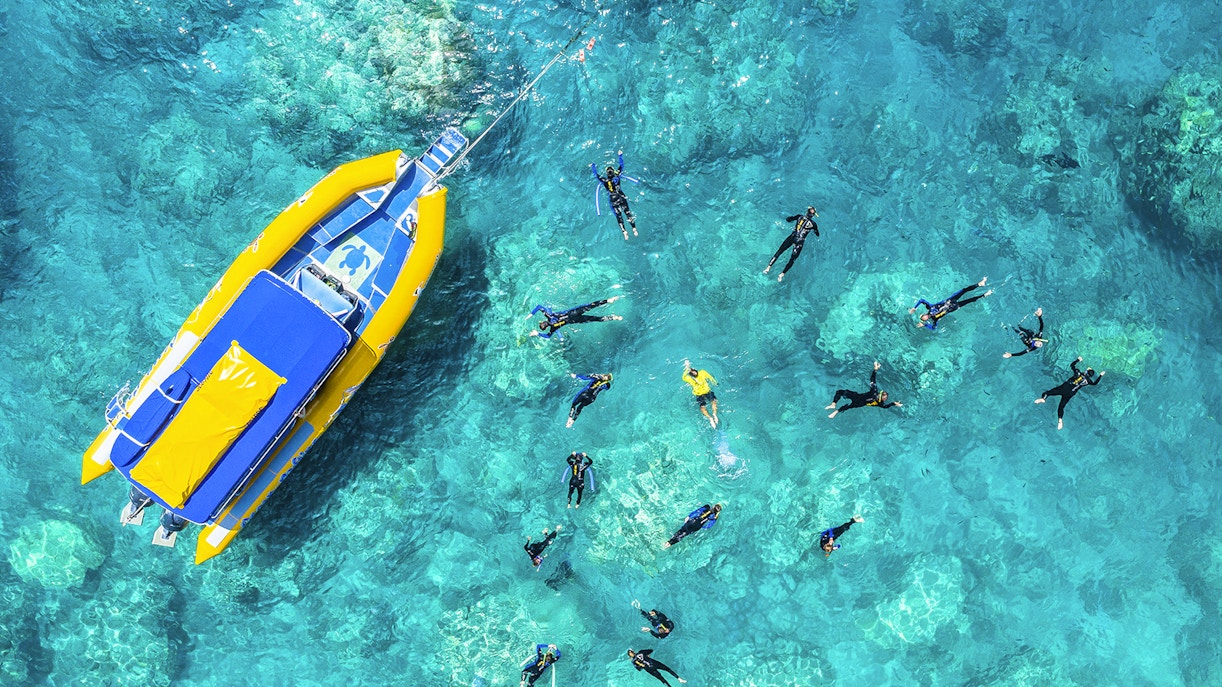
Factor stinger season into your plans: From November to May, stinger suits are provided on most cruises, and outer reef itineraries help reduce the chances of encountering nearshore stingers.
Consider wind patterns for scenic flights: Spring winds can affect flight smoothness, so choose a scenic flight option that offers flexible rescheduling if this experience is important to you.
Book early for peak-weather months: June to September has the most predictable Whitsundays weather, so securing your preferred vessel and departure early is highly recommended.
Frequently asked questions about Whitsundays weather
The calmest seas and clearest skies usually occur between June and August, making winter the most predictable season for outdoor activities.
Whitsundays weather varies by season, with hot and humid summers, mild autumns, cool and dry winters, and warm, sunny springs that gradually heat the islands.
Yes, all cruises offer stinger suits from November to May, ensuring safe water activities during the period when jellyfish are most active.
Yes, most water activities operate year-round, but visibility and water temperature can vary depending on rainfall and seasonal changes.
Wind and visibility can influence flight safety and comfort. Operators may reschedule flights during strong winds or reduced visibility to maintain safety.
March to May generally see fewer visitors while still offering warm weather and suitable sea conditions for cruising and water activities.
Stinger season aligns with the warmer months, from November to May, when rising sea temperatures create ideal conditions for jellyfish activity.


.svg?auto=format&w=156&h=48&q=90&crop=faces&fit=crop)